
Emergency Refrigeration Repairs: What To Do When a Fridge Fails
It usually happens at the worst possible moment. You open up on a Monday morning, or you are halfway through a busy Friday service, and the cabinet that should be humming away is silent and warm. Stock is at risk, customers are coming through the door and the clock is already ticking.
If that sounds familiar, take a breath. This guide walks through what to do in the first few minutes, how to protect your stock, what you can safely check yourself, and when it is time to call for emergency refrigeration repairs. It is written for business owners, kitchen managers and facilities teams across Hampshire and the surrounding areas who need a calm, practical plan rather than a lecture.
What counts as a refrigeration emergency?
Not every problem needs a call-out in the middle of the night, but some absolutely do. As a rule of thumb, treat it as an emergency if any of the following apply:
- The unit has stopped cooling altogether and the temperature is climbing.
- Your fridge is holding above 8°C, which is the upper limit for chilled food in the UK, or your freezer has risen well above -18°C.
- You can hear the compressor repeatedly clicking on and off, or there is a burning smell.
- There is water pouring out of the unit, or a puddle forming near electrical equipment.
- A walk-in cold room is no longer holding temperature and the door is being opened constantly to move stock.
If you are unsure, it is better to ask. A quick call to a fridge engineer costs nothing, and describing what you can see and hear often tells a good engineer exactly what is wrong before they arrive.
The first ten minutes: what to do straight away
What you do in the first few minutes makes a bigger difference to your stock than almost anything the engineer does later. Work through these steps in order.
1. Keep the door shut. Every time you open a fridge or freezer, cold air spills out and warm air rushes in. A closed, well-sealed unit can hold its temperature for several hours, and a full freezer holds cold much longer than a half-empty one. Resist the urge to keep checking.
2. Check the temperature. Use a probe thermometer or the unit display, and write down the reading and the time. This record is useful for your food safety paperwork and for the engineer.
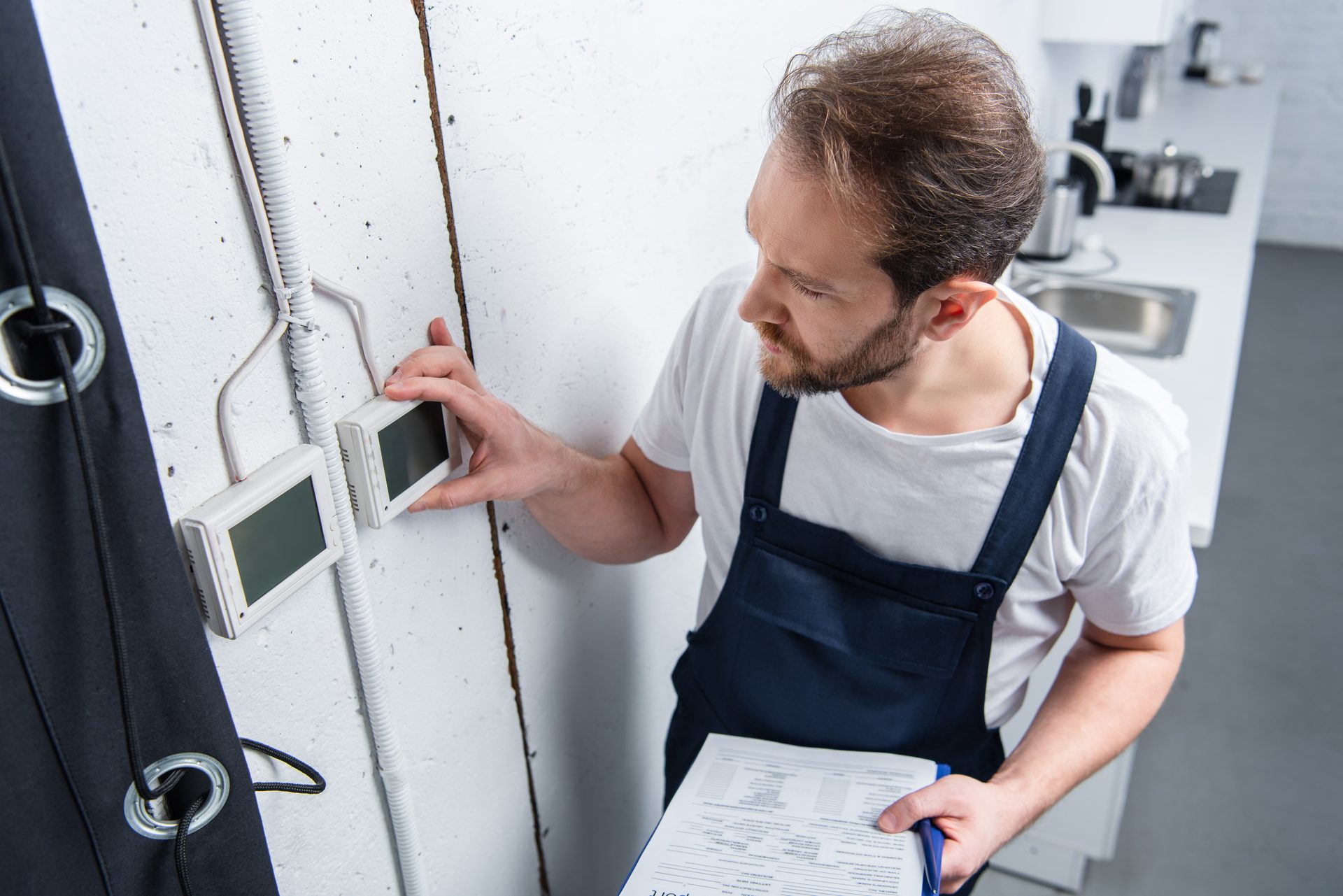
3. Look for the obvious. Is the unit still plugged in? Has the switch been knocked? Has a fuse tripped or a circuit breaker flipped? It sounds basic, but a surprising number of call-outs turn out to be a loose plug or a tripped switch.
4. Call for help early. Do not wait until the stock is already warm. Ring your refrigeration engineer as soon as you suspect something is wrong, and tell them the make and model if you know it, what the display says, and what you have already checked.
How to protect your stock while you wait
While you are waiting for an engineer, your job is to protect what is inside. A little planning here can save hundreds of pounds of food and a lot of stress.
Move the most valuable and most sensitive items first. Fresh fish, meat, dairy and prepared dishes are the priority. If you have a second working fridge or freezer, even a domestic one in a back room, transfer stock into it as quickly as you can without overloading it. Overpacking stops air moving around the food and can leave items warmer than you think.
If you do not have spare cold storage, cool boxes with ice packs, or even bags of ice from a nearby shop, can buy you valuable time. For frozen goods, keep the freezer shut and consider putting a blanket or insulated cover over the unit to slow warming. Never put hot food into a unit that is struggling, and do not try to speed things up by pouring water or ice inside the cabinet.
Is the food still safe?
This is the question everybody asks, and the honest answer is that it depends on how long the temperature has been out of range and what the food is. Chilled food that has been kept above 8°C for an extended period needs careful judgement. Frozen food that has started to defrost should not be refrozen.
Your own food safety management system, and your local environmental health team, should be your reference point. If you are in any doubt, throw it out. Replacing a tray of stock costs far less than dealing with a food safety incident. Keep a note of what was discarded and why, because it helps with insurance claims and your own records.
Simple checks you can safely make yourself
Some faults can be spotted without any tools, and doing a few quick checks before the engineer arrives can speed things up. Stay on the safe side though: never remove panels or touch electrical components, and never try to top up refrigerant yourself. That is a job for a qualified engineer, and in the UK it is regulated under the F-Gas rules.
- Power: confirm the unit has power and that the plug and socket are not damaged or warm to the touch.
- Thermostat: check that the temperature has not been knocked to a warmer setting, especially after cleaning.
- Airflow: make sure vents inside the cabinet are not blocked by stock, and that nothing is crammed against the back wall.
- Condenser area: check that the space around the unit is clear and the condenser is not choked with dust or grease. Switch off before looking, and only clean what you can reach safely.
- Door seals: look for gaps, tears or seals that no longer close firmly. A failing seal lets warm air in and makes the unit work much harder.
- Ice build up: heavy frost on the evaporator or around the door can restrict airflow and stop the unit cooling properly.
If you do find something simple, like a blocked vent or a tripped switch, fix it and monitor the temperature for the next half hour. If it is not recovering, you still need an engineer.
What a good fridge engineer will do when they arrive
A proper emergency call-out is more than a quick look and a guess. A good engineer will start by asking what happened and when, then check the temperature, the controls and the airflow. They will usually inspect the compressor, condenser and evaporator fans, test electrical components, and look for signs of refrigerant leaks.
Where possible, the aim is to get the unit working again on the day, so your stock is protected. Sometimes a part needs ordering, in which case a sensible engineer will explain the options, such as a temporary fix, hire equipment or moving stock to another unit, so you are never left guessing.
Make sure you ask for a clear explanation of what failed, what was done and whether it is likely to happen again. That information is what helps you decide whether to repair or replace. If the unit is old and keeps failing, our guide to upgrading commercial refrigeration units explains when replacement starts to make financial sense.
Common causes of sudden refrigeration failure
Most breakdowns are not truly sudden. They are the end of a slow problem that nobody spotted. Understanding the usual suspects helps you spot trouble earlier.
Dirty condensers. When the condenser coil is covered in dust, grease or fluff, the system cannot get rid of heat. It runs hotter, works harder and eventually trips out or fails. This is the most common cause we see, and it is entirely preventable with regular cleaning.
Failed fans. The evaporator and condenser fans keep air moving through the system. When one stops, cooling performance drops quickly, and you may notice uneven temperatures or ice forming in odd places.
Refrigerant leaks. A slow leak reduces cooling capacity over time. The unit seems to struggle on warm days, then eventually cannot keep up. Leaks should always be found and fixed, not just topped up.
Worn door seals and hinges. Warm, humid air entering the cabinet creates condensation and ice, and the system works harder all day long.
Electrical faults. Faulty relays, controllers, sensors and start components can all stop a perfectly healthy compressor from running.
Blocked drains. A blocked defrost drain can cause water to back up into the cabinet and freeze, leading to leaks and airflow problems.
How to avoid needing emergency refrigeration repairs again
The best emergency is the one that never happens. A little routine care goes a long way, and it is far cheaper than a failed unit on a busy weekend.
- Book planned maintenance. Regular servicing catches worn parts and small leaks before they become breakdowns. Our article on cold room maintenance packages shows what a good plan includes.
- Keep condensers clean. Check them regularly and arrange professional cleaning in dusty or greasy environments.
- Log temperatures daily. A written record spots creeping temperatures early and gives you evidence for your food safety checks.
- Do not overload cabinets. Leave space for air to circulate and keep stock away from fans and vents.
- Act on early warnings. Strange noises, longer running times, ice build up and rising bills are all signs that something needs attention.
- Know who to call. Keep your engineer’s number somewhere everyone in the team can find it, including out of hours.
Be prepared before it happens
Take ten minutes this week to put together a simple emergency plan. Write down who to call, where spare cold storage is, who is responsible for moving stock and where the cool boxes and probe thermometers are kept. Pin it up where the whole team can see it.
It is also worth checking your insurance. Some policies cover spoiled stock after equipment failure, and some require evidence of regular servicing. Keeping your service records and temperature logs up to date makes any claim much smoother.
If you are in Hampshire, Southampton, Winchester or Portsmouth, local engineers can usually reach you faster, which matters when every hour counts. You can read more about how quick local help works in our guides to commercial fridge repairs in Winchester and same-day fridge repairs in Portsmouth.
Need help with a refrigeration problem now?
If your fridge, freezer or cold room has failed, or you are worried that it is about to, do not wait and hope. The sooner an engineer is on the way, the better your chances of saving your stock and keeping your business running.
The team at The Cold Management looks after commercial refrigeration and air conditioning across Hampshire. Get in touch and tell us what is happening, and we will help you work out the quickest way to get back up and running.
Share This Story, Choose Your Platform!
About The Cold Management Refrigeration

Table Of Contents
- What counts as a refrigeration emergency?
- The first ten minutes: what to do straight away
- How to protect your stock while you wait
- Is the food still safe?
- Simple checks you can safely make yourself
- What a good fridge engineer will do when they arrive
- Common causes of sudden refrigeration failure
- How to avoid needing emergency refrigeration repairs again
- Be prepared before it happens
- Need help with a refrigeration problem now?